In some vacation photos, it’s a single color that catches the eye first. On our trip to the Kaprun reservoirs, that color is the turquoise of the water. Behind it rise the mountains, above it hang clouds—and in the midst of it all, the dam walls reveal the sheer scale of this place.
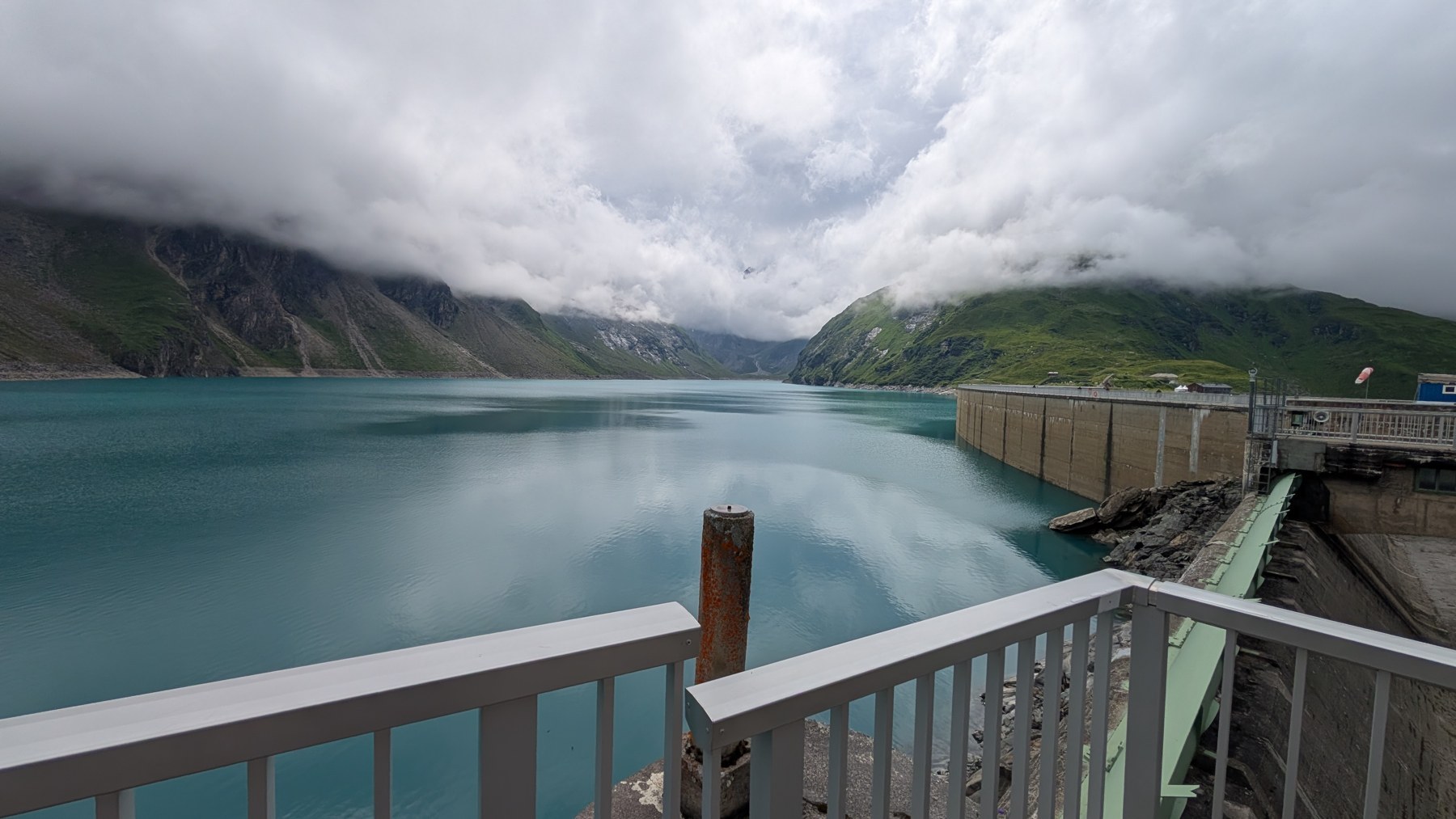
Turquoise water, a dam wall, and clouds clinging to the mountainsides.
The ascent itself is part of the story
Before we reached the vast expanses of water, we had to make our way up. In photos taken from the open-air inclined lift, the structural beams, the adjacent hillside, and our own faces all appear close together. It offers a completely different perspective on the mountain landscape compared to hiking.
The ascent itself became part of the excursion. It wasn’t just the destination that provided a striking scene—the journey there did, too. Set against the green slopes, the engineering infrastructure gives the landscape an entirely different character.
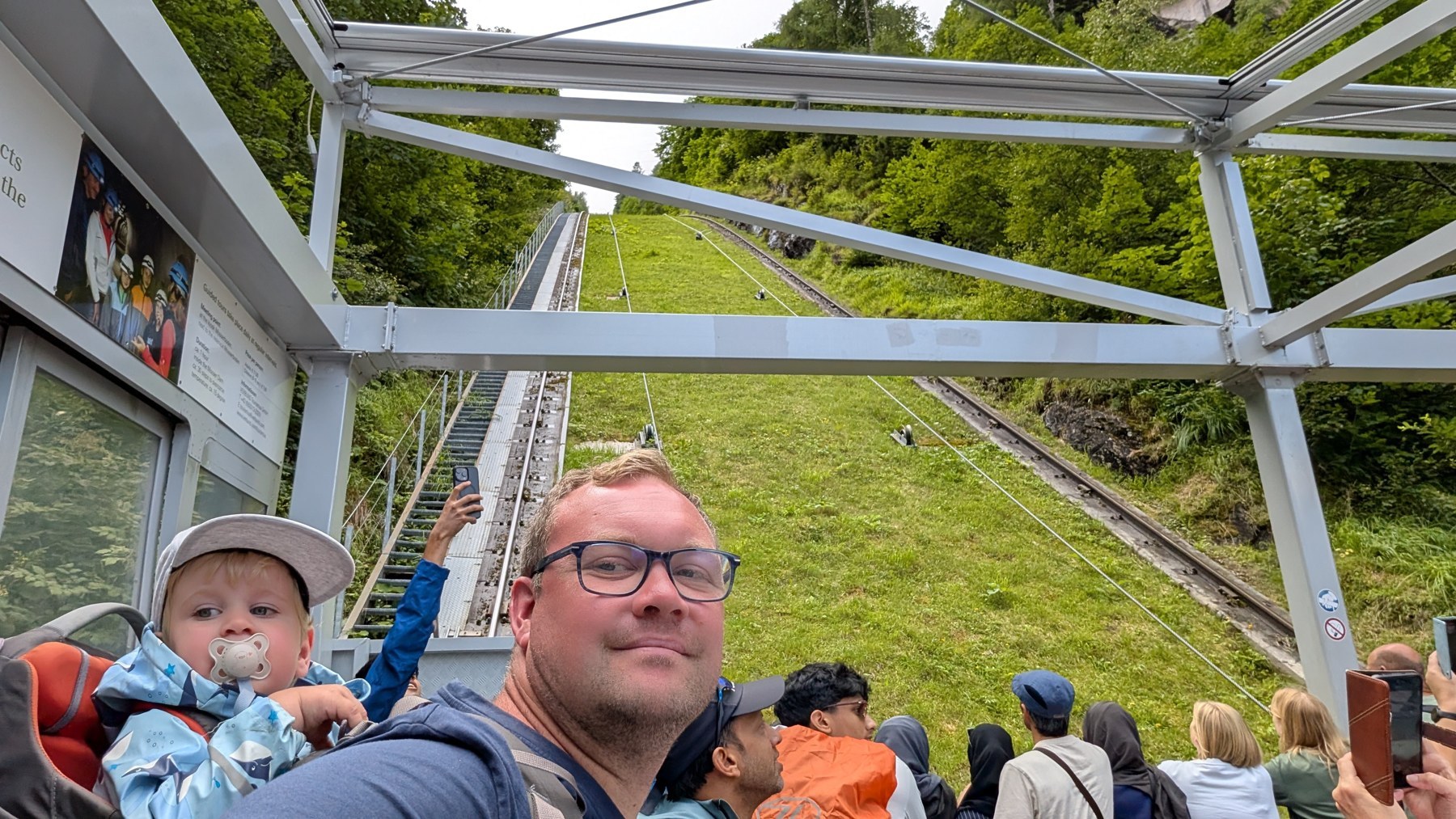
A family moment during the ascent in an open funicular.
Grand structures, small people.
Up top, the scale shifts. Railings run along the edges of the water and across the massive structures. Solitary figures stand at the edge, while walls and mountainsides stretch far across the frame.
You might look at a photograph of a reservoir and try to grasp its scale. But if someone is standing by the railing in that same shot, the contrast becomes tangible. It is no longer just a body of water and a wall; it becomes a relationship between human, landscape, and structure.
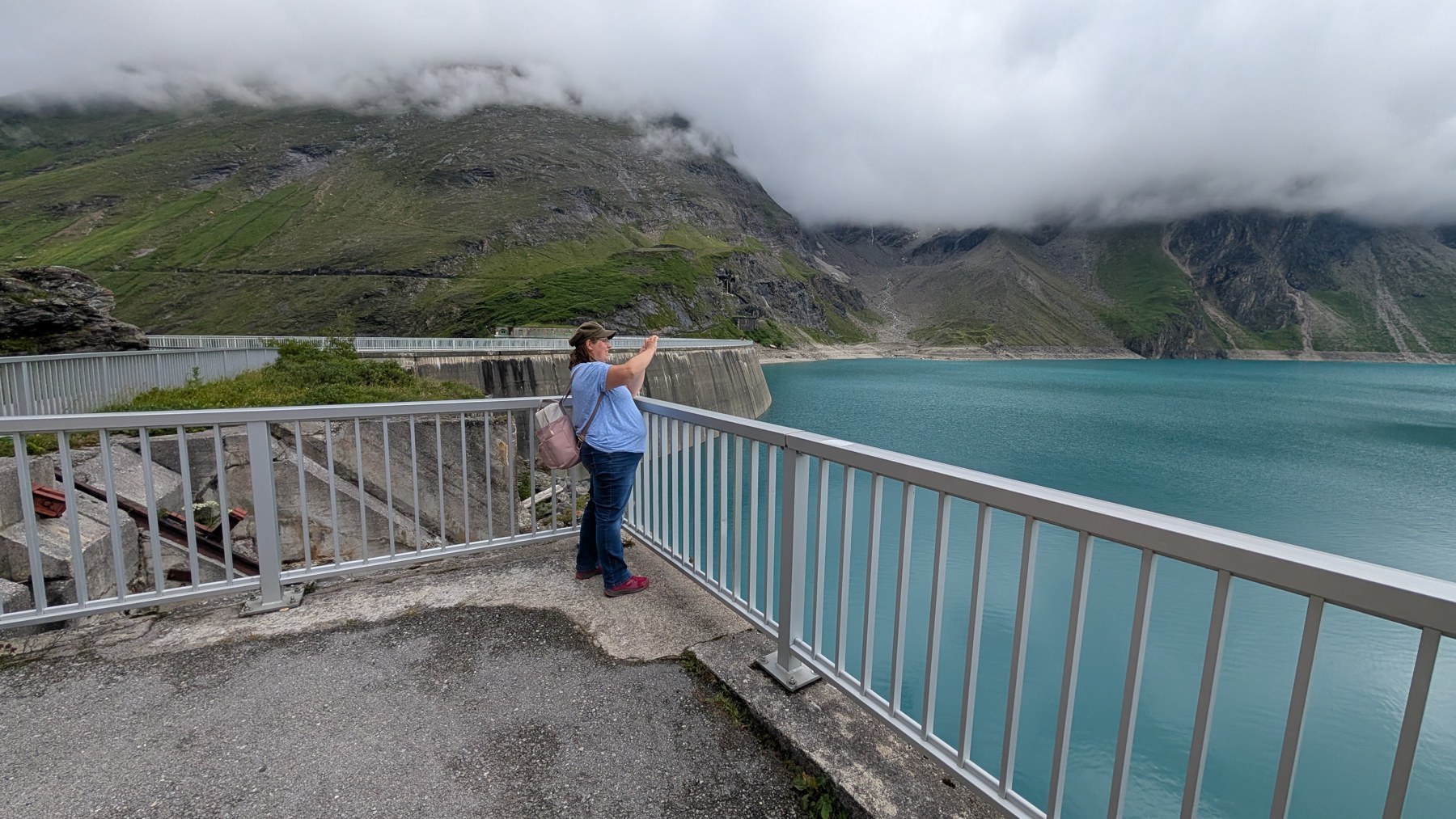
From the railing, the view extends across the reservoir.
On this day, clouds hung low over the slopes in places, ensuring the images don’t look like polished, picture-perfect postcards. The turquoise water glows amidst grey clouds, rock faces, and patches of green—a contrast that lends the scene its unique atmosphere.
There is more here than just a beautiful lake.
The excursion also included an exhibition. Historical accounts and information about hydroelectric power complement the view. A scale model allows visitors to explore the subject from a different perspective than the one found outside, in front of the massive dam wall.
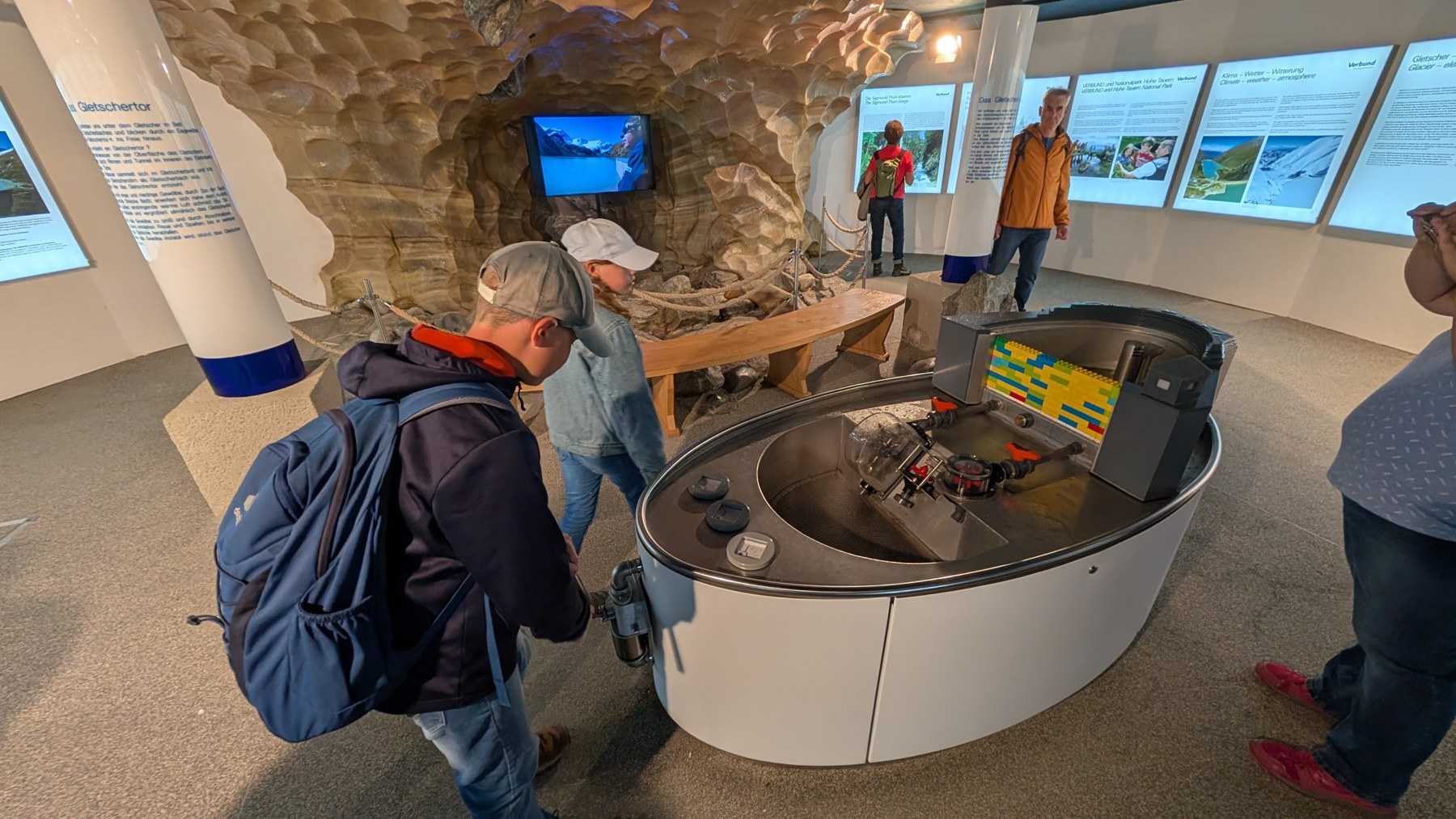
Between the panoramic views, there is plenty to discover in the exhibition on hydroelectric power.
In this way, the day gained a second focus alongside the panoramic views. Outside, the sheer scale of the surroundings took center stage; inside, the focus shifted to the stories behind the structures themselves. This combination makes for an engaging excursion: you aren’t just gazing out at the landscape—there is also plenty to discover.
One water-themed scene lingers—the next will be much louder.
Naturally, we also took family photos. Captured by the railing with the expanse of water in the background, these personal moments stand out among the grand landscape shots. They transform a simple destination into a true highlight of our vacation.
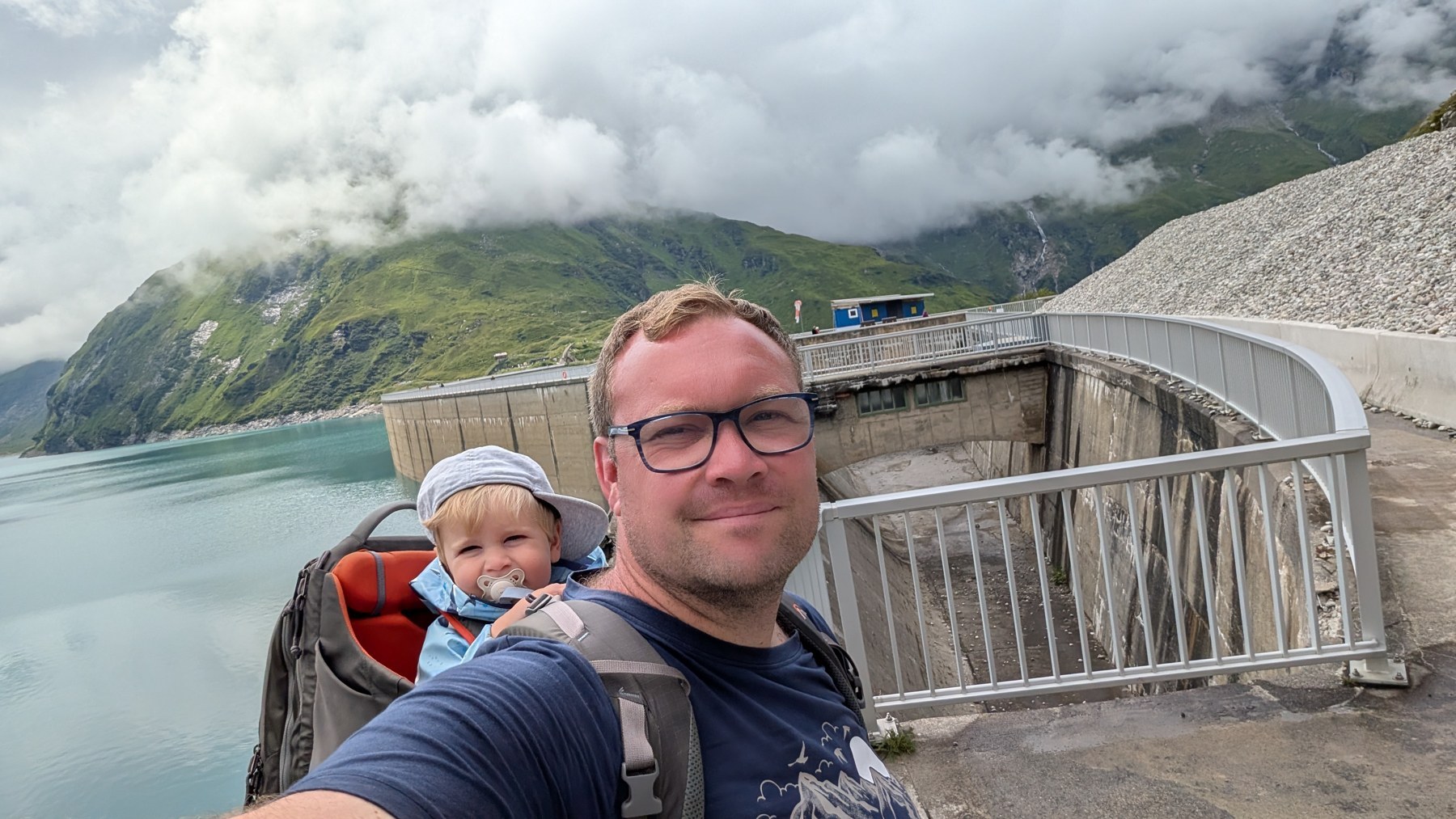
A souvenir photo with the reservoir in the background.
In this travel chronicle, what remains of Kaprun is, above all, that tranquil turquoise hue. The following day, water would once again play the starring role—though in Krimml, rather than resting quietly nestled in the mountains, it came cascading and foaming down over the rocks.
Next chapter: When the waterfall takes center stage in a family photo: our day in Krimml.
Context for your visit
The Kaprun high-mountain reservoirs consist of the Mooserboden and Wasserfallboden. You can find visitor information and useful details about this destination via: Zell am See-Kaprun. Please check the current opening hours and available services before planning your own trip.
Tips for your excursion to the Kaprun reservoirs
- Plan for the ascent. Access to the high-mountain reservoirs is provided via a visitor transfer system consisting of buses and an inclined lift. According to the local tourism office, it is not possible to drive directly to the reservoirs by private car or bicycle.
- Bring an extra layer of clothing, even in summer. If your destination is at an altitude of around 2,000 meters, pack weather-appropriate clothing and check the forecast for that specific elevation.
- Keep an eye on the time for the last return transfer. Upon arrival, check the current timetable and the details for your return trip. When planning walks, photo opportunities, or guided tours, ensure you leave yourself plenty of extra time.
- When traveling with children, don’t try to do too much at once. The official guide mentions the "Stromtrail" (a trail focused on energy/hydropower), which is stroller-friendly. A family-oriented route that allows time for exploration might be a better choice than trying to reach an additional mountain peak.
- Combine nature with technology. If you’re looking for more than just the view, consider visiting the exhibition on hydropower or taking a guided tour of the dam wall. Check on-site for availability and the scope of what’s offered.
Official planning resource: Kaprun High-Mountain Reservoirs – Getting There and Visiting.
Research conducted: November 4, 2026. These planning tips are separate from the travelogue covering the trip in July 2025; please verify current prices, dates, and terms via the linked websites of the respective operators.
Continue exploring our vacation journey
- The entire trip
- July 20 · Allianz Arena
- July 21 · Jungfernsprung
- July 22 · Schönleitenspitze
- July 23, 2025 · No summits today: our day at the TAUERN SPA
- July 24, 2025 · Turquoise waters amidst the mountains: our day at the Kaprun reservoirs
- July 25, 2025 · When the waterfall takes over the family photo: our day in Krimml
- July 26, 2025 · Marveling like royalty: our day at Schönbrunn Palace
- July 27, 2025 · One day, three worlds: from the Vienna Prater to an evening overlooking Prague
- July 28, 2025 · Little people, giant dinos: our prehistoric finale near Kleinwelka
Post updated on November 5, 2026.
Your thoughts
Comments 0
No approved comments yet.
Write a comment
Name and comment are required. Up to 5000 characters.